Trip Reflections
Greenland: Aurora Howl
On ice, aurora, persistence, and the warmth found at the edge of the world
Ice & Landscape
The Language of Ice
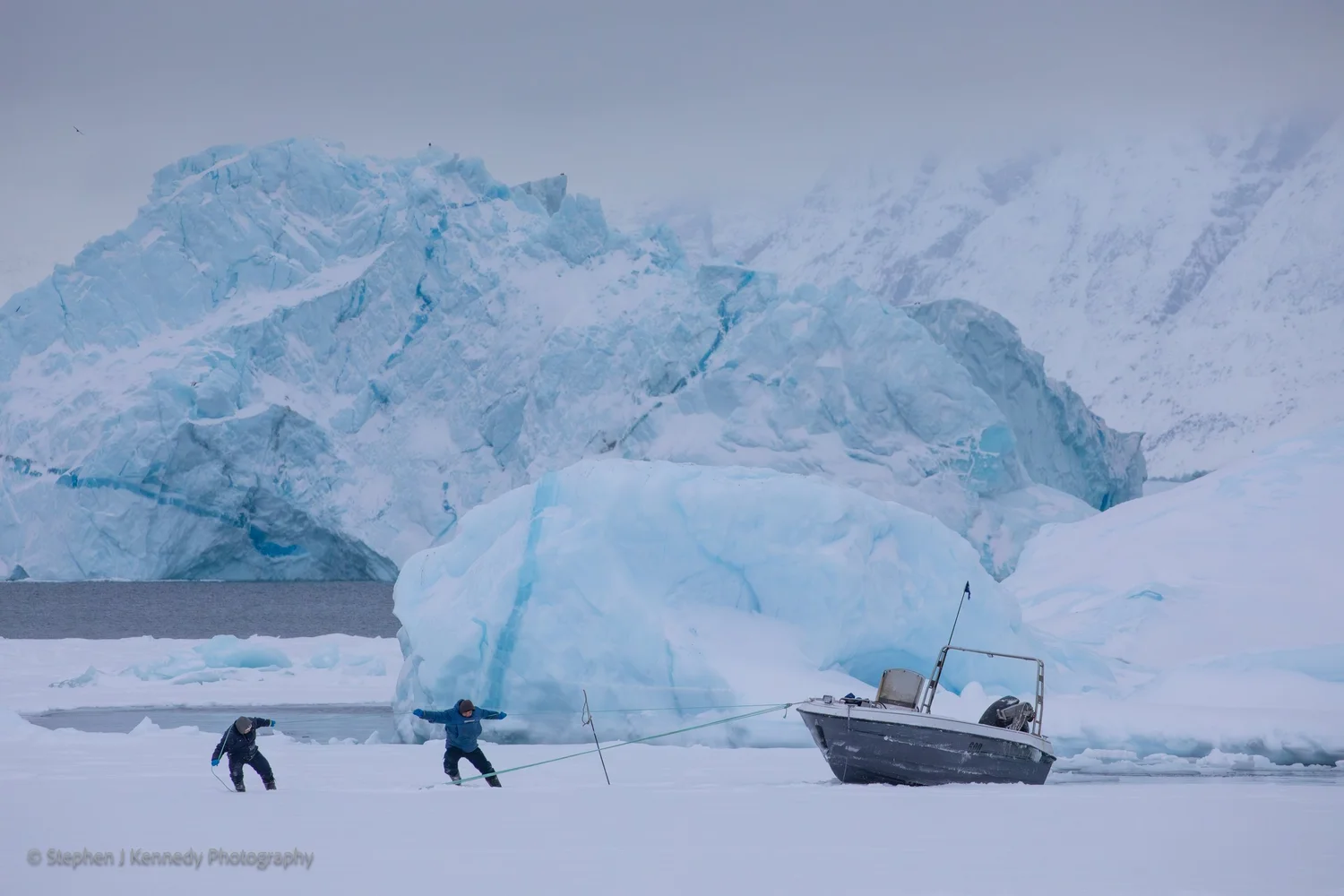
Greenland speaks in ice. Not the brittle, temporary ice of winter puddles, but ancient ice — ice that has traveled centuries from the interior, calving into Disko Bay with booms that roll across frozen fjords like distant thunder. Ice that cracks beneath your boots on a frozen lake, not breaking but shifting, groaning, alive in ways that make you reconsider what stillness means.
I came to Greenland to photograph aurora borealis. What I found was a landscape that demanded apprenticeship.
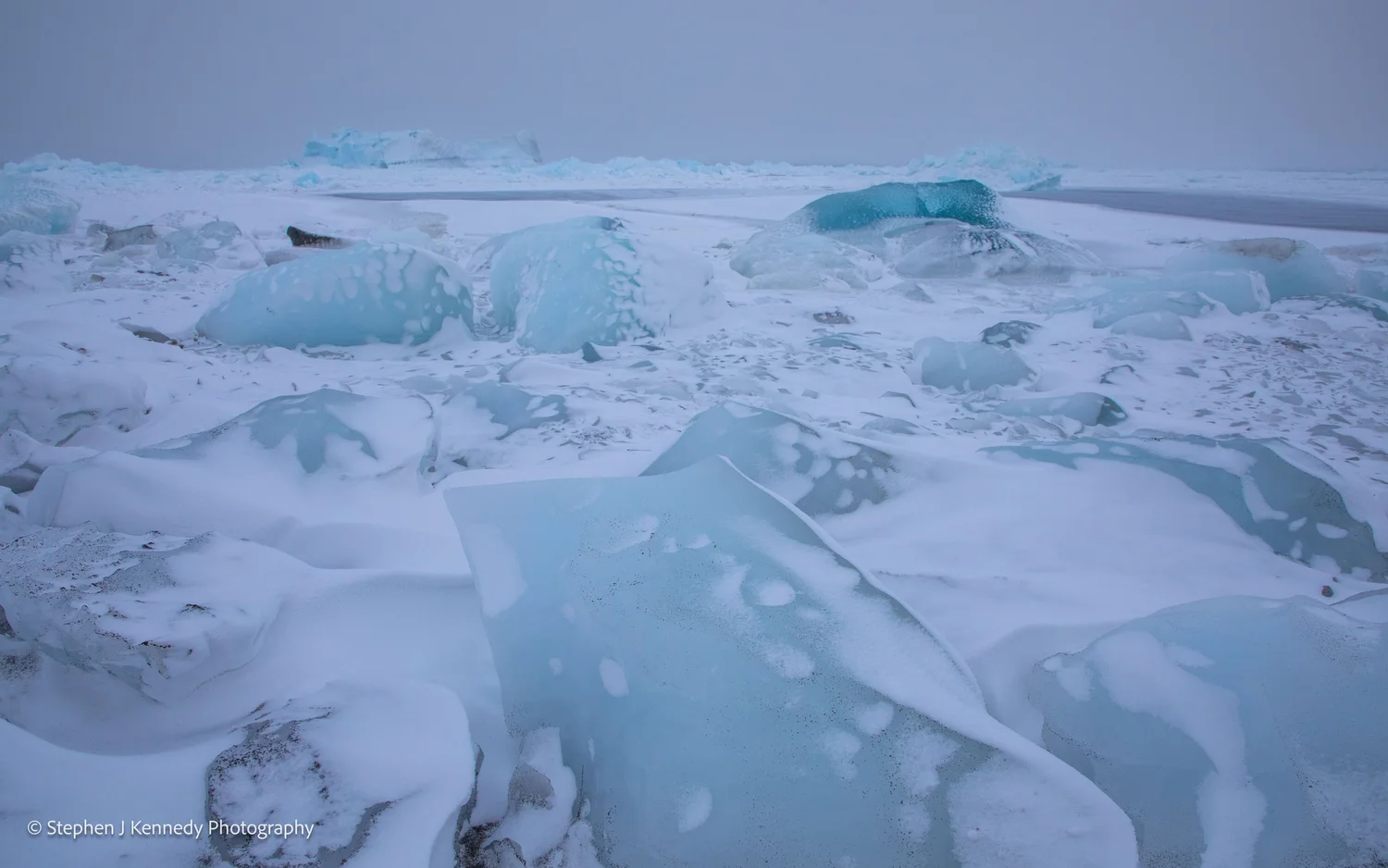
The icebergs of Ilulissat tower offshore like cathedrals — some the size of cathedrals, others merely the size of houses. They drift silently through Disko Bay, remnants of the Sermeq Kujalleq glacier. Standing on the boardwalk at -20°C, adjusting camera settings with fingertips that sting in vicious fjord windchill the moment they leave gloves, you learn quickly: Greenland teaches attentiveness. There is no room for carelessness when wind chill approaches -34°C and your snood freezes solid from your own breath.
The ice patterns on Tasersuaq Lake in Uummannaq revealed themselves slowly — wind-carved textures, pressure ridges, the delicate geometry of freeze and thaw. Walking across that lake at night, hearing it crack and shift beneath me while green light gathered overhead, was such a surreal experience.
Aurora & Light
The Dogs Know First
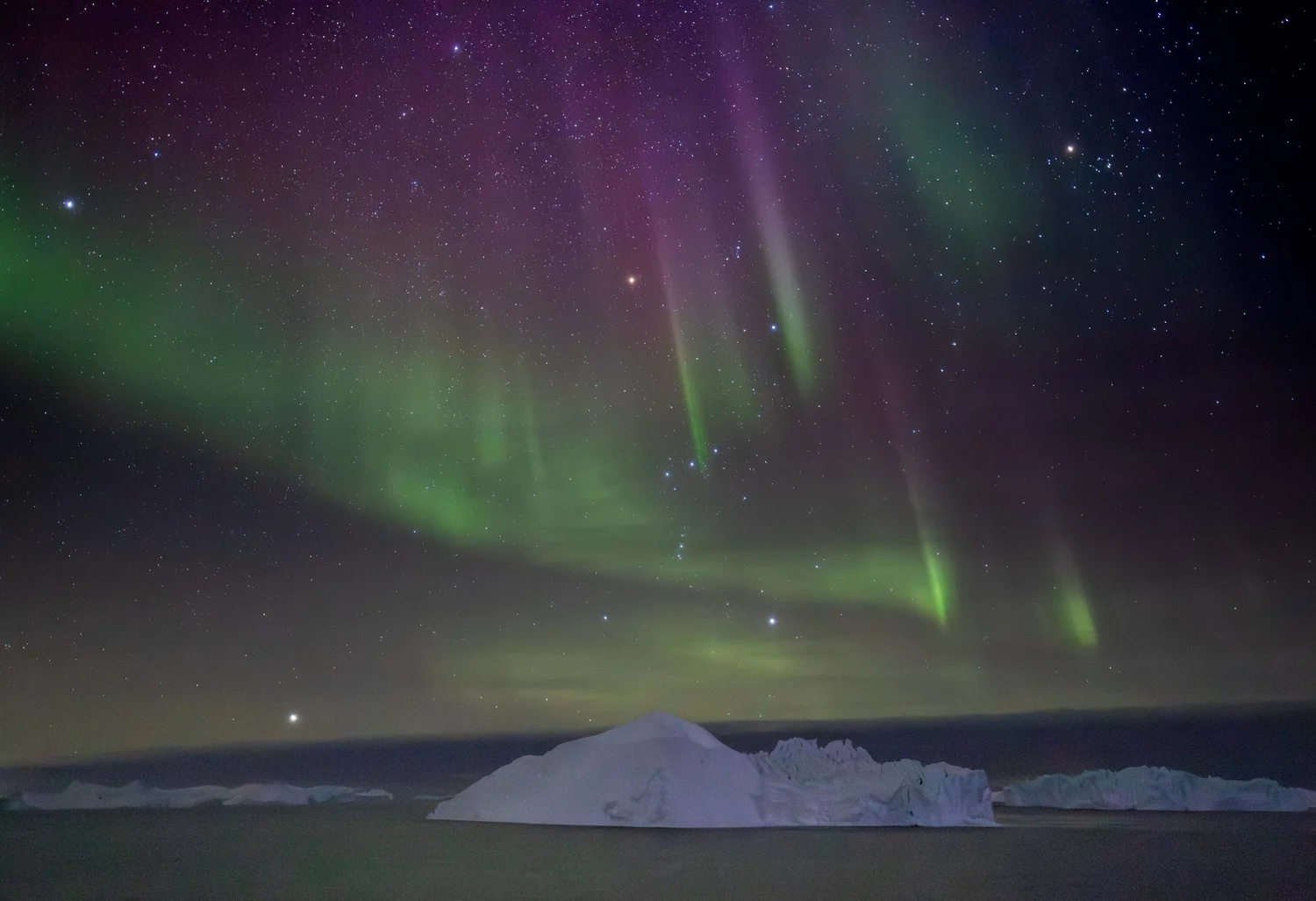
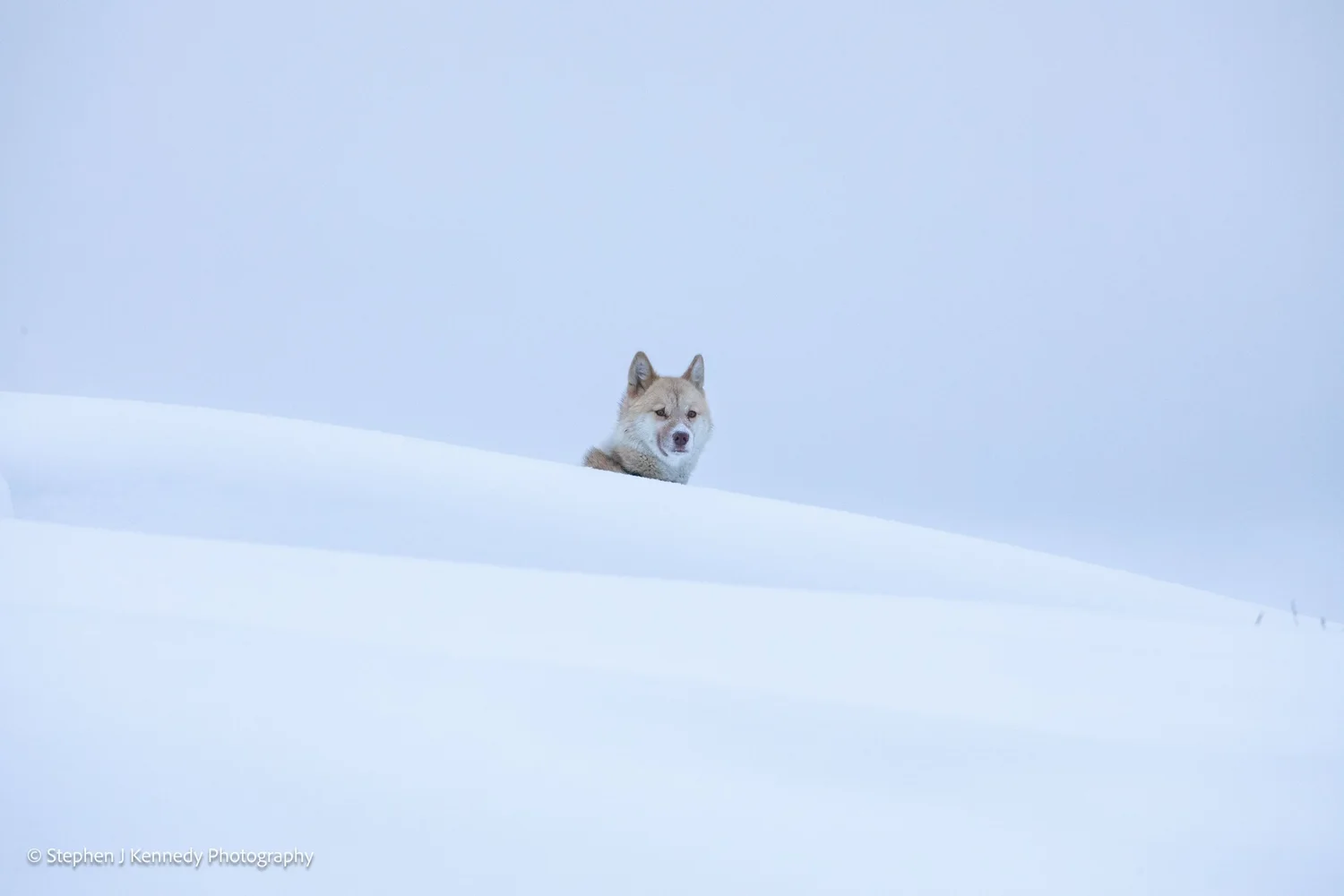
In Ilulissat, near the Icefjord Centre, sled dogs live in encampments. Hundreds of them. Their howling carries across the snow — low, rhythmic, ancient.
I learned to listen for them.
On February 14, standing over the beautifully architected Ilulissat Icefjord Centre for the first time, the forecast looked uncertain. Cloud overhead. The aurora app showed minimal activity. We went out anyway.
The dogs began to howl.
Minutes later, a faint green shimmer appeared low to the south. As it strengthened, the cloud thinned and parted. The sky opened.
It happened again on February 15. And again on February 21, 22, 23, and 27.
Seemingly every time, the dogs howled before the light intensified.
The February 15 display in Ilulissat was extraordinary — a full corona overhead, green ribbons radiating from a central point directly above us. We photographed aurora dancing over the massive icebergs locked in the ice fjord, the ancient ice glowing green beneath the sky's fire.
I don't know if it's magnetic sensitivity, atmospheric pressure, or something older than science has named. But I stopped checking the app as often. The Greenland weather and night sky wasn't predictable, save the howl of the sled dogs.
And I noticed something else: on four separate occasions, when cloud cover looked discouraging, a faint shimmer would appear on the horizon. As the aurora built steadily, the clouds would thin and clear — as though the aurora itself could move them. I don't know the physics. Perhaps it was sheer luck. But I watched it happen. Four times.
The Night of Persistence
February 22 in Uummannaq.
Overcast. I walked out early to the frozen lake beneath Uummannaq mountain. For nearly an hour, nothing dramatic unfolded. The cold moved inward through layers that had felt sufficient indoors. My fingers stiffened. My toes numbed.
It would have been easy to stay inside.
Instead, I trudged back across a snow covered frozen lake, up a hill to the apartment, added more layers, restored feeling to stiff fingers — and went back out.
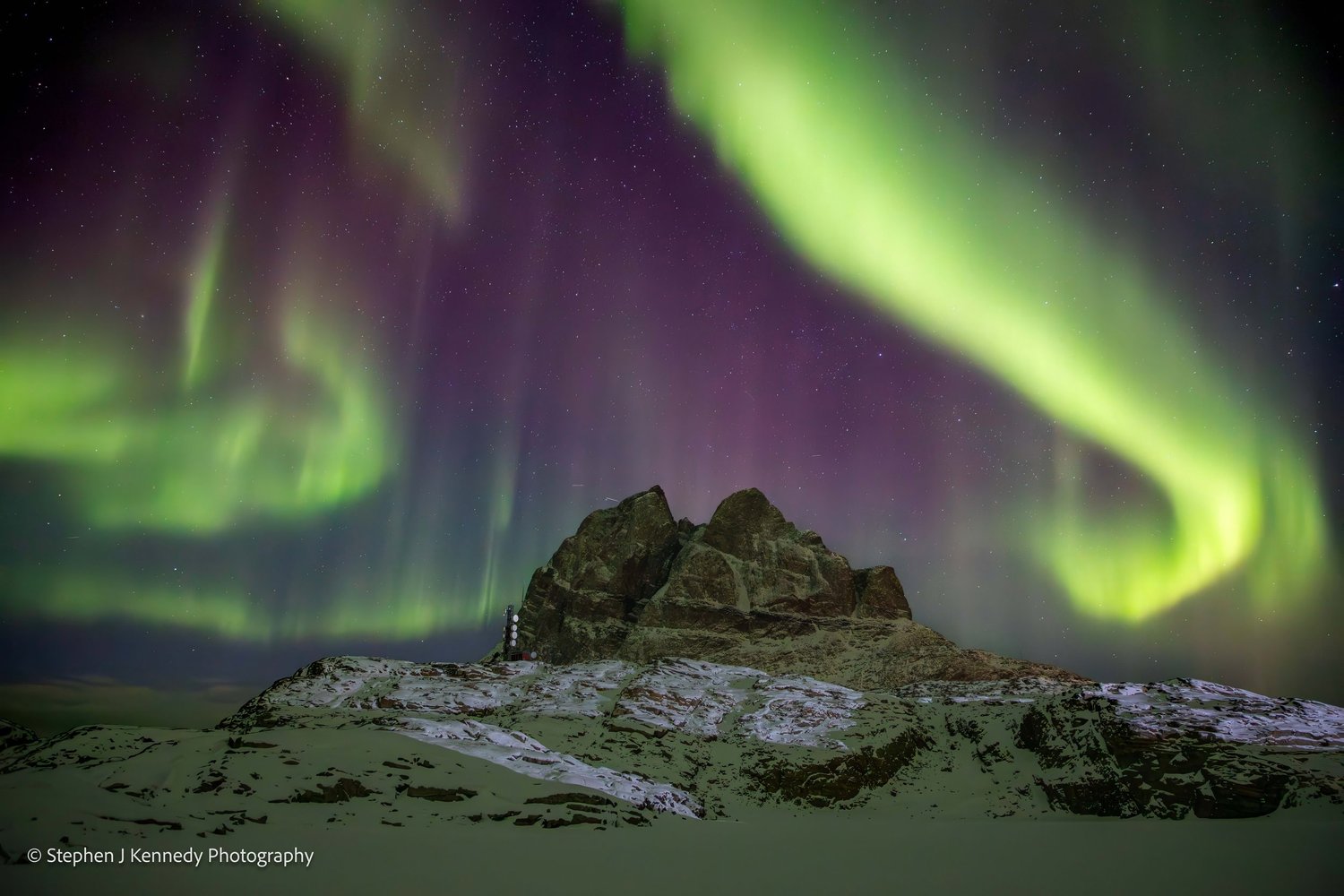
Not long after returning, the sky exploded into a full corona overhead. Green ribbons converged directly above us, radiating from a central point like spokes of light. Beneath our boots, the ice groaned faintly. The dogs howled throughout the display.
It felt ancient. Elemental. Worth every frozen breath.
I learned persistence matters. The best moments don't announce themselves. They wait for those willing to return.
Red Before Green
Before the nights of green light, there was red.
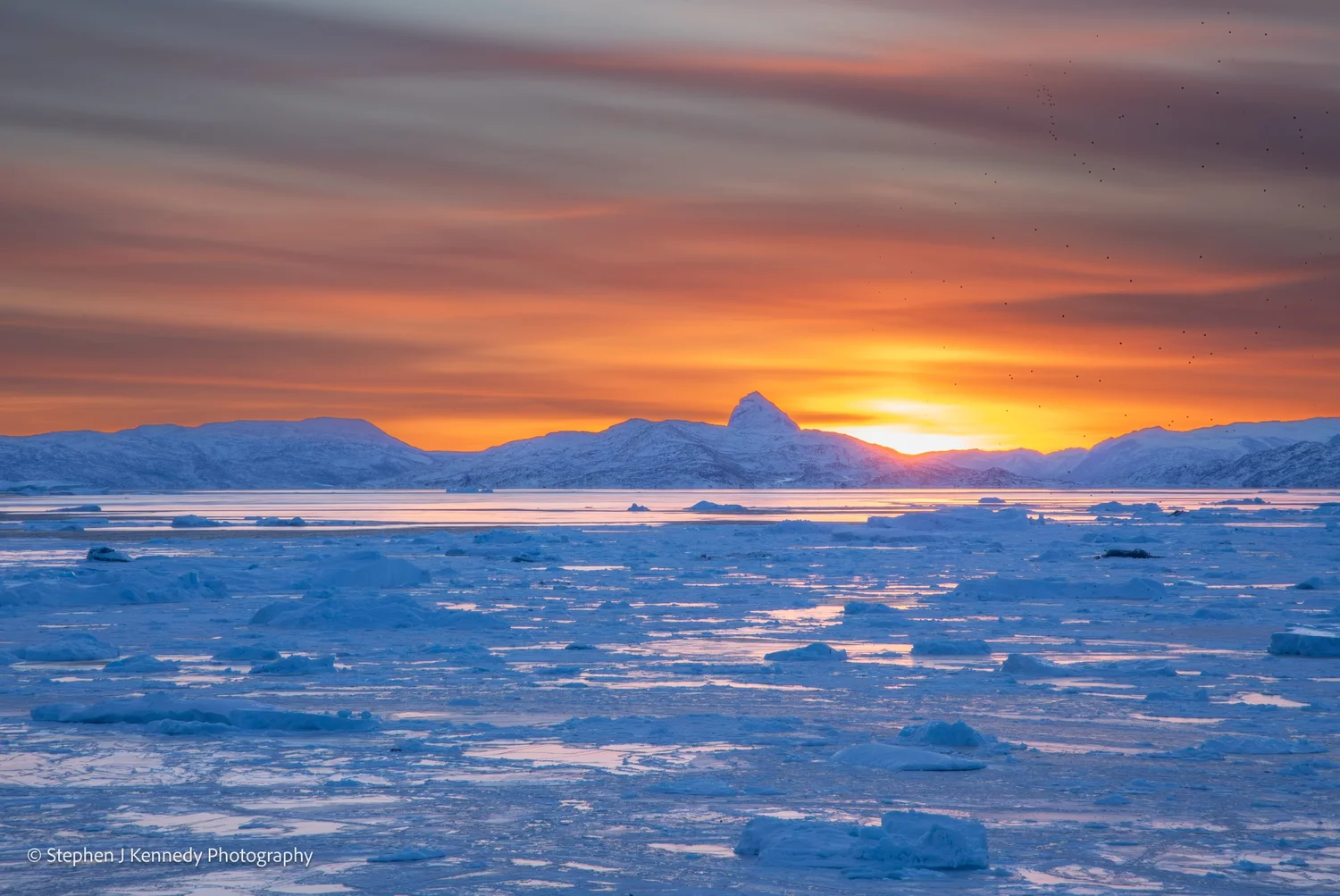
February 17 in Uummannaq. Before the town stirred, I stepped onto the apartment balcony. The horizon ignited.
Deep crimson spilled across the blue sea-ice of the frozen fjord, turning ice to hammered copper. The mountain — immense, cathedral-like — caught the glow along its ridgeline. The sky burned in silence, with the snow dusted peaks of the fjord mountains silhouette.
After nights chasing aurora in Ilulissat, this red stillness felt profound. No movement. No flicker. Just color and cold and the slow turn of the earth.
I photographed it, but mostly stood there in awe at such a breathtaking scene.
Weather & Place
Weather as Sovereign
Greenland operates on its own terms.
Helicopters cancelled due to technical issues or poor visibility over the fjord. Our flight to Nuuk aborted after twenty minutes of taxiing through whiteout. Snow blasting horizontally across the runway at -44°C wind chill. Running back across the tarmac in a maelstrom, eyelashes frozen, nostril hairs stiffened, beanie iced over.
Plans loosened their grip.
Air Greenland staff handled disruptions with calm efficiency — rebooking flights, arranging accommodation, navigating weather with the practiced ease of those who know the Arctic doesn't negotiate.
The unplanned detour to Qaarsut — a tense 15-minute helicopter flight down the fjord due to poor visibility, followed by a 3.5km walk along frozen fjord from the village of Qaarsut to the airport hotel in -30°C wind chill — became an unplanned highlight. The warmth and generosity of the Greenlandic people shone through: dinner prepared by kind staff who welcomed stranded travellers. Quiet morning photography around the settlement before flying onward to Ilulissat.
The Fairy-Tale Arrival
February 16. Helicopter from Qaarsut to Uummannaq.
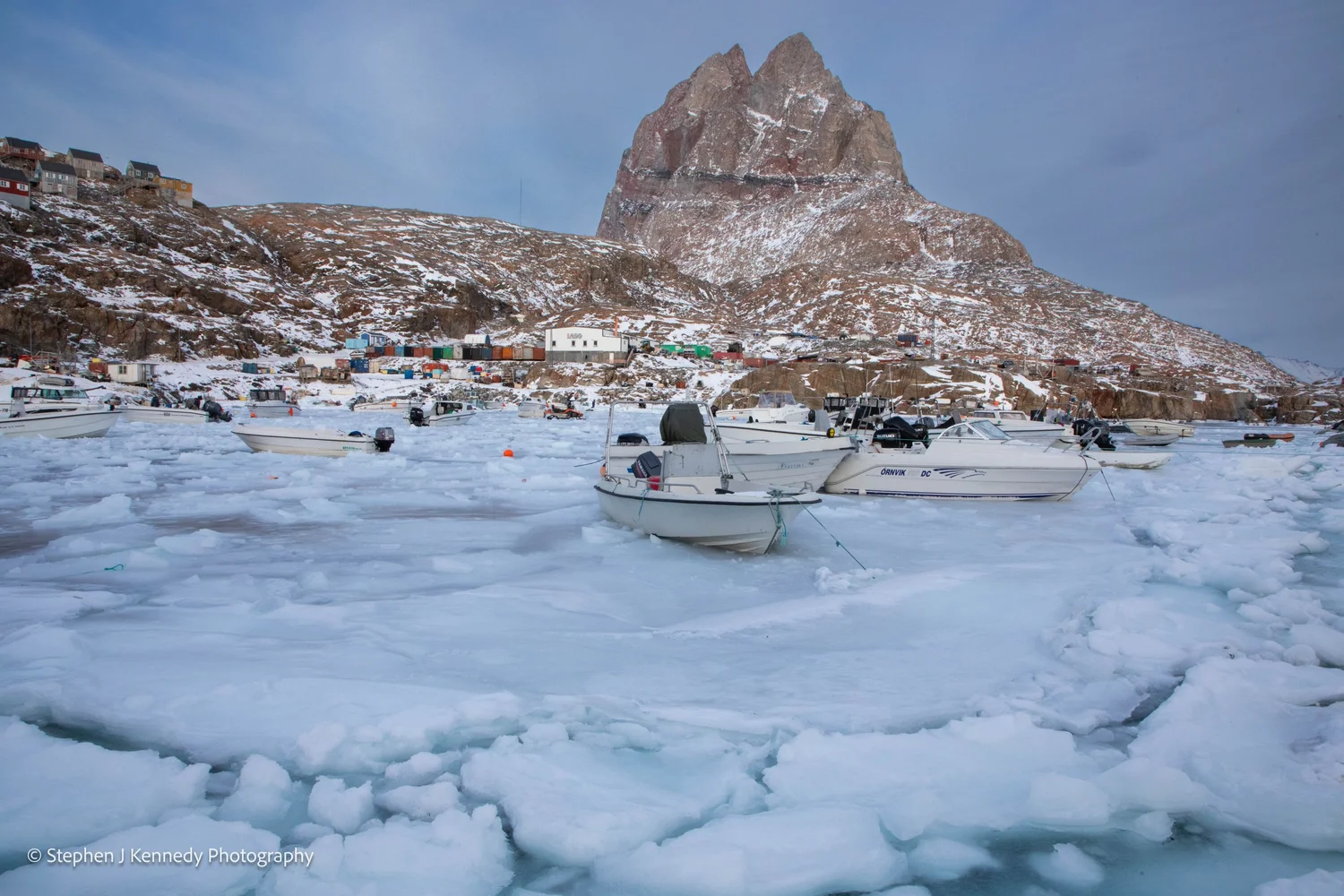
Approaching at dusk, snow dusted the landscape in soft blue light. The mountain rose ahead — immense, cathedral-like. Below, scattered town lights glowed warmly against the white.
I remember staring out of the helicopter window in quiet awe. It felt unreal. Fairy-tale like.
Uummannaq sits at 70°N, a small settlement beneath a distinctive heart-shaped mountain. Colourful houses — red, blue, yellow — stand against white fjord and ice. The frozen expanse of Tasersuaq Lake stretches beyond the town, icebergs locked in place until spring.
For eight days, this became home. Photographing harbour scenes in falling snow. Walking across frozen lakes. Watching red sunrises ignite the fjord. Waiting for the dogs to howl.
Aurora Tally
Ten Nights of Light
Aurora tally: 10.
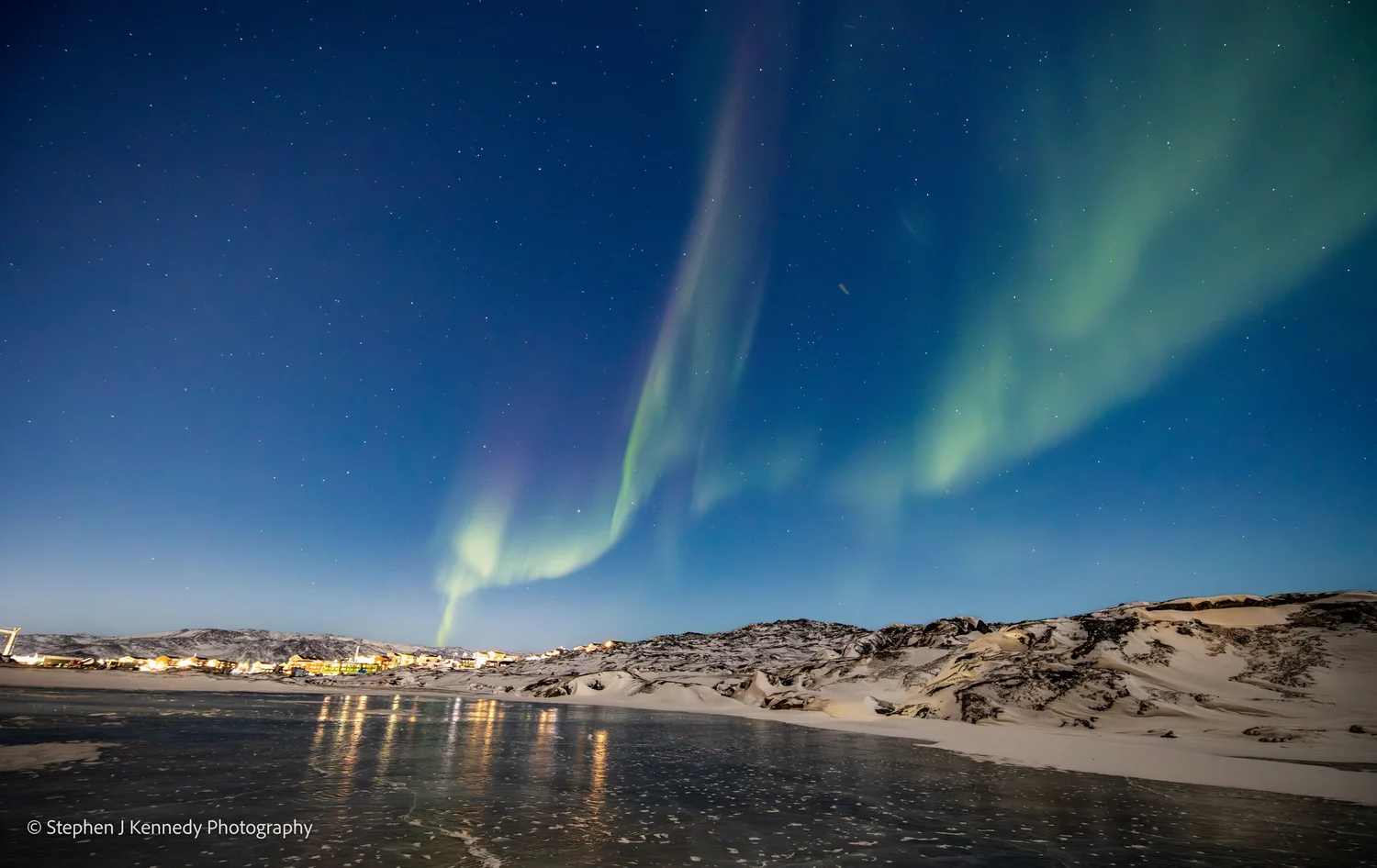
From the subtle shimmer above Keflavík Airport on February 10, to the moonlit display over Ilulissat's frozen fjord on February 27, the aurora appeared more nights than not.
Some were gentle — faint green arcs low to the south. Others were explosive — full coronas overhead, ribbons converging, the sky alive with movement.
The February 15 display in Ilulissat stands out: a full corona directly overhead, green ribbons radiating from a central point while we photographed aurora dancing over the massive icebergs locked in the ice fjord. The ancient ice glowed green beneath the sky's fire.
The best displays in Uummannaq came later — the persistence night on February 22 when I went back for more layers, and the lake reflections on February 23. The lake provided reflections when wind cleared the snow. The mountain framed the light. The dogs howled.
But the lesson wasn't about the strength of the display. It was about showing up.
February 14: forecast uncertain, cloud overhead. We went out anyway. The sky opened.
February 15: discouraging conditions. We walked out anyway. Full corona over icebergs.
February 22: overcast, cold, nothing happening. I went back for more layers and returned. Full corona.
The aurora doesn't care about apps or forecasts. It appears when conditions align — and you have to be there.
And sometimes, when cloud cover looks impossible, a faint shimmer on the horizon builds steadily — and the clouds clear. I watched it happen four times. As though the aurora itself could move them. If in the Arctic, ignore the apps, just go aurora hunting and you will find it.
What Remains
Greenland receded as flights carried me south — Nuuk to Reykjavik, Reykjavik to Copenhagen, Copenhagen to Gatwick.
But the sound of cracking ice — and the howling before the northern lights — did not.
I came to photograph aurora. What I found was a landscape that demanded presence. Ice that spoke. Dogs that knew before the sky opened. Cold that taught respect. Weather that ruled absolutely.
Over three weeks, I hiked 123km across Arctic terrain, ascending 3,132m through ice fields, frozen fjords, and mountain trails — each step documented in Strava, each hike a lesson in attentiveness.
And ten nights of green light over frozen lakes, icebergs, and mountains — each one earned by showing up, adding layers, and going back out.
Greenland teaches attentiveness. It rewards persistence. And it doesn't negotiate.
I wouldn't have it any other way.
My thanks to Ollie Taylor for leading a memorable photography workshop, and to Norman, Gavin, Sandy, John, Sally, Amanda, and Cat for being such wonderful companions on the journey.
Qujanaq, Greenland.